
AI Virtual Receptionist vs. Your Other Options: What Home Service Businesses Need to Know
Compare AI virtual receptionists vs. human answering services, voicemail, and in-house staff. Find the best fit for your home service business.
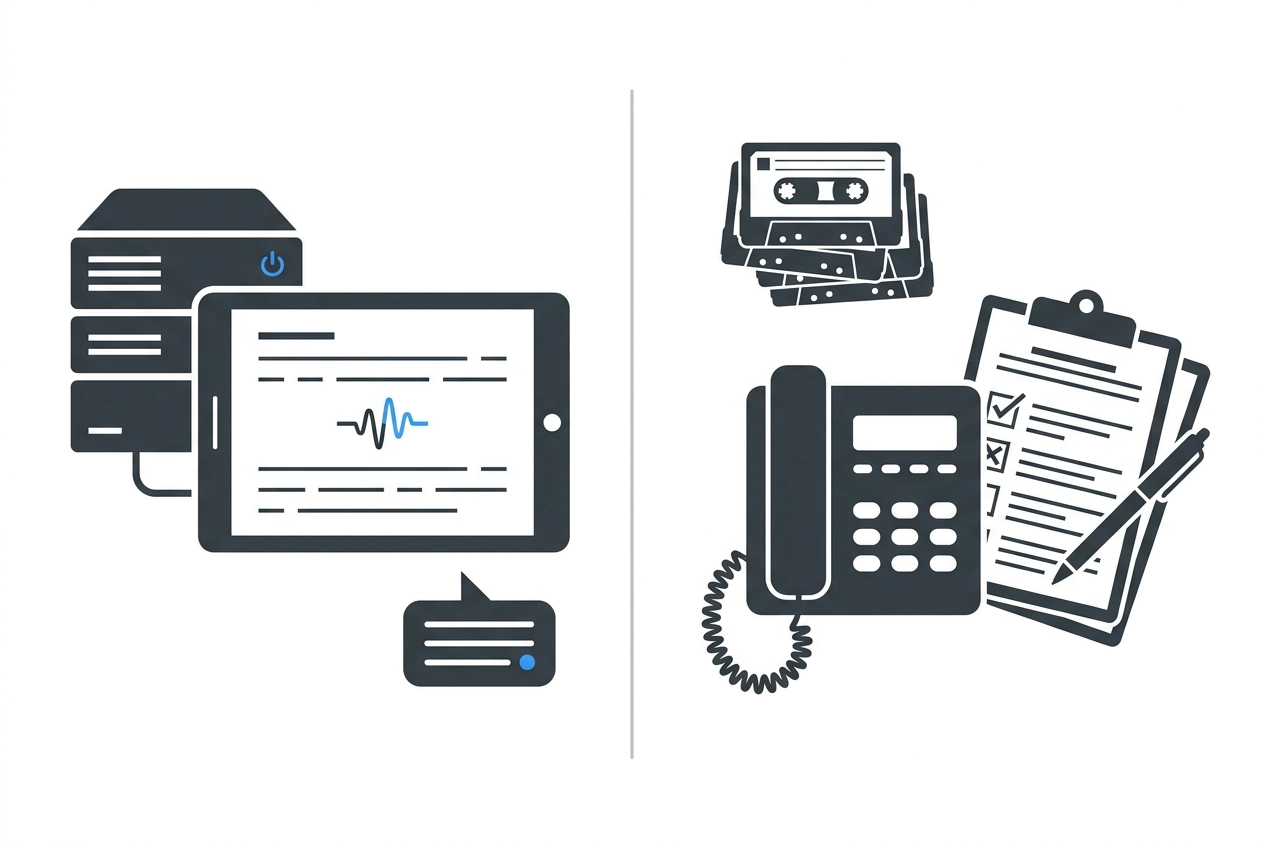
Every missed call is a missed paycheck. For home service businesses like HVAC companies, plumbers, and electricians, the phone is the lifeline of your operation. Yet most small business owners are still relying on voicemail, stretched-thin staff, or expensive human answering services to handle incoming calls. There is a better option gaining serious traction in 2026: the AI virtual receptionist.
This post is designed to help you cut through the noise and make a smarter decision about how your business handles communication. You will learn exactly what an AI virtual receptionist is, how it stacks up against your current alternatives, and what it actually costs you every time a call goes unanswered. We will also walk you through what features matter most for home service businesses, where human answering services still hold an advantage, and how to determine whether this technology is the right fit for your operation. Whether you are considering your first upgrade or re-evaluating a system that is no longer working, this guide gives you the clear, honest comparison you need to move forward with confidence.
What Is an AI Virtual Receptionist?
An AI virtual receptionist is software that answers incoming calls in real time, responds to common questions, qualifies callers, and books appointments without human involvement. The system handles the entire interaction from first ring to confirmed appointment.
The key distinction from older technology is how these conversations work. A basic voicemail records a message. An auto-attendant plays a menu and routes a keypress. A modern AI virtual receptionist uses natural language processing to hold a genuine back-and-forth conversation, understanding what a caller says in their own words and responding accordingly.
For home service businesses, that capability has direct operational value. When a caller says "my pipe burst" or "we have no heat," the system recognizes the urgency, skips the scheduling queue, and routes the call immediately to an on-call technician. Non-emergency requests, such as a routine HVAC tune-up or a water heater quote, go straight to the calendar without requiring any staff action.
The system runs 24 hours a day, 7 days a week, including nights, weekends, and holidays. That matters because plumbing failures and heating outages do not follow business hours, and most small trade offices are closed precisely when emergency calls come in.
By 2026, AI answering services have emerged as a recognized category within small business communication technology, sitting at the intersection of VoIP phone systems and AI-powered customer interaction tools. If you're wondering whether callers will actually accept this technology, what home service customers actually experience may surprise you.
The Real Cost of a Missed Call in Home Services
Understanding the technology is only half the picture. The more urgent question for any home service business is what it actually costs when that technology is absent.
When a homeowner calls during a plumbing emergency or a heating failure and reaches voicemail, they do not leave a message and wait. They hang up and call the next result on Google. That call, and the job attached to it, is gone in under 30 seconds.
Those after-hours and weekend calls are not routine inquiries. They represent urgent, non-deferrable problems where the customer's primary concern is getting help fast, not negotiating price. Emergency jobs consistently carry higher ticket values than standard scheduled work, which makes every missed after-hours call a disproportionately expensive loss.
That single missed call can eliminate years of potential revenue, no maintenance contract, no referrals, from a household that simply never got through.
This problem is not limited to nights and weekends. A small office handling 40 or 50 calls per day will drop calls during peak morning hours when every line is occupied and technicians are in the field. Busy periods create the same voicemail drop-off as closed hours. The cumulative numbers are often a wake-up call for business owners who assumed the problem was minor.
The flip side is equally clear: capturing every inbound call expands the bookable lead pool without a single additional dollar in advertising spend.
AI Virtual Receptionist vs. Your Alternatives: A Side-by-Side Look
So the missed call problem is real. The next question is: which solution actually fixes it? You have four options, and they are not equal.
AI Virtual Receptionist | Human Answering Service | In-House CSR | Voicemail | |
|---|---|---|---|---|
Availability | 24/7, no extra cost | After-hours costs extra | Fixed business hours | Always on |
Annual Cost | Flat monthly subscription | Variable; scales with volume | $35,000–$50,000+ with benefits | Effectively free |
Lead Qualification | Asks intake questions, determines urgency | Takes a message | Yes, when present | None |
Appointment Booking | Books directly into scheduling software | Forwards message; you call back | Yes, when present | None |
Consistency | Identical interaction every call | Varies by agent and shift | Varies by individual | N/A |
Workflow Integration | Connects to FSM and CRM platforms | Manual handoff required | Manual entry | None |
The gaps matter. Missed calls in home services carry serious revenue consequences, and the solution you choose determines whether a caller becomes a booked job or dials your competitor next.
Cost is where the comparison sharpens fastest. A single full-time receptionist or CSR represents a significant fixed payroll commitment before you factor in training, turnover, or sick days. Human answering services keep base costs lower, but per-minute and per-call pricing means every busy season spike hits your invoice directly.
Booking conversion is the critical functional gap. Human answering services relay messages; your staff still has to call back, and by then the customer may be gone. An AI virtual receptionist writes the appointment during the call itself, with no callback queue and no manual entry step.
Voicemail, for all its availability, converts very few home service callers. It is not a competitive answer in 2026.
Where Human Answering Services Still Have an Edge (and Where They Fall Short)
The comparison above gives a fair overall picture, but human answering services deserve a closer, more honest look on both sides of the ledger.
Where they genuinely outperform AI: A live agent can read tone, slow down for a distressed caller, and offer the patient, empathetic conversation a homeowner dealing with a flooded basement or a January heating failure sometimes needs before they are ready to book. Most AI systems handle standard intake well but struggle with callers who are upset, confused, or talking past the script. For those edge cases, a human is still the better handler.
Cost is also worth acknowledging. For a business fielding fewer than 10 to 15 calls per day, a human answering service's per-call pricing can be competitive with a flat AI subscription, at least until call volume grows enough for the math to shift.
Where they consistently fail home service businesses: The structural problem is the message-taking model. Human agents collect a name and number, then relay it to the business, creating a callback queue rather than a confirmed booking. Availability and actual lead capture are very different things.
Callback queues leak revenue. The business calls back, the customer has already booked a competitor, or the customer screens an unfamiliar number and never picks up. That "captured" lead was never really captured.
Human services also create a manual handoff: agents forward call notes, and someone on staff must re-enter that information into scheduling or dispatch software, adding time, effort, and room for errors.
What to Look for in an AI Virtual Receptionist Built for Home Services
If message-taking is the core weakness of human answering services, direct action capability is the core strength to demand from any AI replacement. Not all AI receptionists are built equally, and home service businesses have specific requirements that generic systems often miss.
Urgent call escalation and live transfer is non-negotiable. The system must recognize distress language like "no heat," "flooding," or "gas smell" and immediately transfer the caller to an on-call technician rather than offering a next-week appointment slot. A homeowner with a burst pipe at midnight will hang up the moment they sense the system is routing them toward a scheduler.
Direct appointment booking separates true AI receptionists from glorified voicemail. The appointment should write to your scheduling system in real time during the call, not after a staff member reviews a message the next morning. Look for native integrations with ServiceTitan, Housecall Pro, or Google Calendar; a system that only exports to a spreadsheet creates manual work you already have.
Lead qualification depth determines whether your technician arrives prepared. The system should ask configurable intake questions covering service area, property type, issue description, and preferred time window. That information turns a cold callback into a briefed dispatcher.
Call recording and transcripts give you operational visibility. Every interaction should be logged so you can review quality, resolve billing disputes, and refine your intake script over time.
After-hours and overflow flexibility should work automatically. The system needs to cover both scenarios: closed-office hours and peak-hour overflow when staff are already on calls, without requiring manual mode switching.
Conversational language quality is the final filter. Test the system with realistic scenarios before deploying. Robotic, stilted responses increase hang-ups and damage your brand more than a professional voicemail would.
Is an AI Virtual Receptionist Right for Your Business?
Knowing what to look for is step one. Knowing whether you actually need it is step two.
Strong fits:
Trade businesses with consistent inbound volume. HVAC, plumbing, and electrical companies that field calls outside standard hours are losing jobs every week to competitors who answer. With a significant share of service calls arriving after hours and most voicemail callers never calling back, the revenue case is straightforward.
Businesses burned by human answering services. If your current setup generates a callback queue instead of confirmed bookings, you're not capturing leads, you're collecting them and hoping. That gap is where competitors win.
Owner-operators answering their own phones. A full-time in-house receptionist costs over $53,000 annually in fully-loaded costs. An AI receptionist runs a fraction of that and covers hours no employee will.
Weaker fits:
Highly technical call types. If most of your inbound calls require a licensed technician to quote or diagnose before anything else can happen, no front-end system, AI or human, adds much value at the intake stage. AI handles the conversation before the technician; it cannot replace the technician's judgment.
Businesses at full capacity. If your schedule is already full and you have no ability to absorb new jobs, capturing more leads creates scheduling pressure without revenue upside. The tool solves a lead capture problem, not a capacity problem.
For the businesses in the first three categories, Virtual Dispatcher is built for home service businesses specifically. Call answering, lead qualification, appointment booking, and urgent call routing are designed around plumbing, HVAC, and related trades, not adapted from a generic small business template.
Why Buyers Are Moving Toward Integrated Communication Platforms
Choosing the right AI virtual receptionist is only half the decision. The other half is how well it connects to the rest of your business.
Small business technology is shifting toward fewer, better-connected tools rather than accumulating separate systems that require staff to bridge the gaps manually. Buyers increasingly want call handling, CRM, scheduling, and dispatch to share a single data layer.
Systems that only export to a spreadsheet recreate the same manual handoff problem human answering services create.
The strongest implementations eliminate staff intervention entirely. A completed call should automatically create or update a customer record, generate a job ticket, and notify the assigned technician. That's the benchmark worth holding vendors to.
When evaluating any AI receptionist, ask directly which field service management and CRM platforms it supports through native integrations versus general-purpose automation tools like Zapier. Native integrations are more stable, require less maintenance, and break less often when either platform updates.
Businesses that achieve true call-to-dispatch integration compress the time between a customer's first contact and a confirmed technician assignment. In emergency scenarios, that speed is a direct competitive advantage.
Making the Right Call for Your Business

With the full comparison in view, two practical tools help you act on it.
Start with one concrete audit. Pull one week of call data and count how many calls reached voicemail after hours or during peak periods. That number is your baseline. If even a fraction of those callers booked with a competitor instead, the revenue loss likely exceeds the monthly cost of an AI receptionist several times over.
The smarter metric is cost-per-booked-job, not cost-per-month. A single emergency HVAC or plumbing call converted at after-hours rates can generate $300 to $800 or more in revenue. An AI receptionist that captures one additional emergency job per week pays for months of service from that single ticket.
For HVAC, plumbing, and field service businesses specifically, Virtual Dispatcher is built for exactly this context. It answers every call 24/7, qualifies leads, books appointments directly to your calendar, and routes urgent calls to your on-call tech automatically.
Ready to stop sending revenue to voicemail? See how Virtual Dispatcher works for your business at VirtualDispatcher.ai.
Conclusion
Stop treating your phone system as an afterthought. Your competitors are not. An AI receptionist built for home services works every hour, books every appointment, and routes every urgent call without hesitation.
Ready to capture every call and convert it into booked revenue? Visit VirtualDispatcher.ai and see it in action today.